The Causal Mindset Framework
Originally published in Causal Python weekly. Sign up and get up-to-date coverage of Causal AI for free.
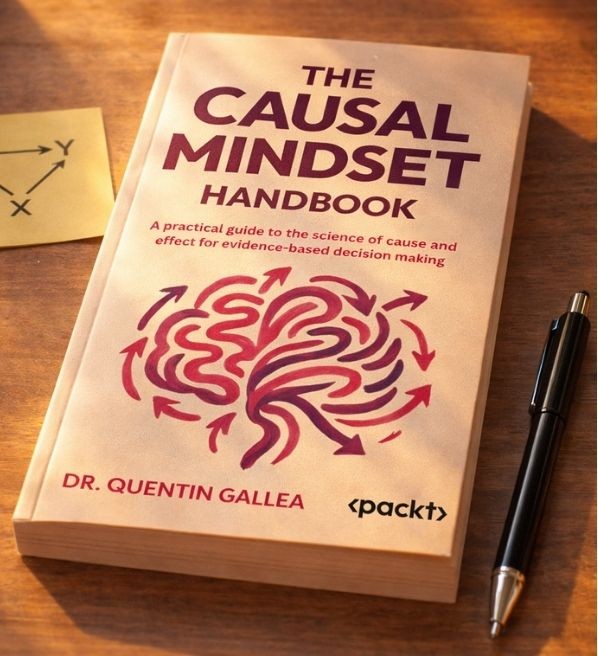
A brand-new book on causality just landed!
What to expect?
A clear conceptual introduction to causal reasoning for decision-makers.
What’s in it?
While most books on causal inference target data scientists, statisticians, or computer scientists, this book contains neither a single math formula nor a line of code. The Causal Mindset by Quentin Gallea focuses on how a causality-aware leader would be deliberate, act, and evaluate. For that purpose, the author has designed The Causal Mindset Framework, which consists of five key steps:
- Identify the comparison being made between your actual case and the counterfactual scenario and evaluate its quality.
- Search for hidden factors. Is there something else?
- Determine whether these hidden factors are amplifying or attenuating the results.
- Iterate and refine the analysis.
- Assess whether the findings can be reliably applied to a different context or to the future. Can we extrapolate?
Why it matters
These steps may sound familiar to the causal community. What makes the framework special is how the author proposes them as part of a decision-making process in a big company, and many other real-world situations.
One of the highlights of the book (spoiler alert) is when the author discusses Key Performance Indicators (KPIs). When people are expected to achieve a KPI, they might end up focusing on the appearance of success rather than the underlying real goal.
Doctors, for instance, might take mortality rates as a KPI, since a doctor is expected to save lives. However, that might nudge them to be unwilling to treat risky patients.
Leaders with a causal mindset can avoid these side effects and focus on producing the right ones.
Our verdict
Managers, businessmen and policymakers will love it!